
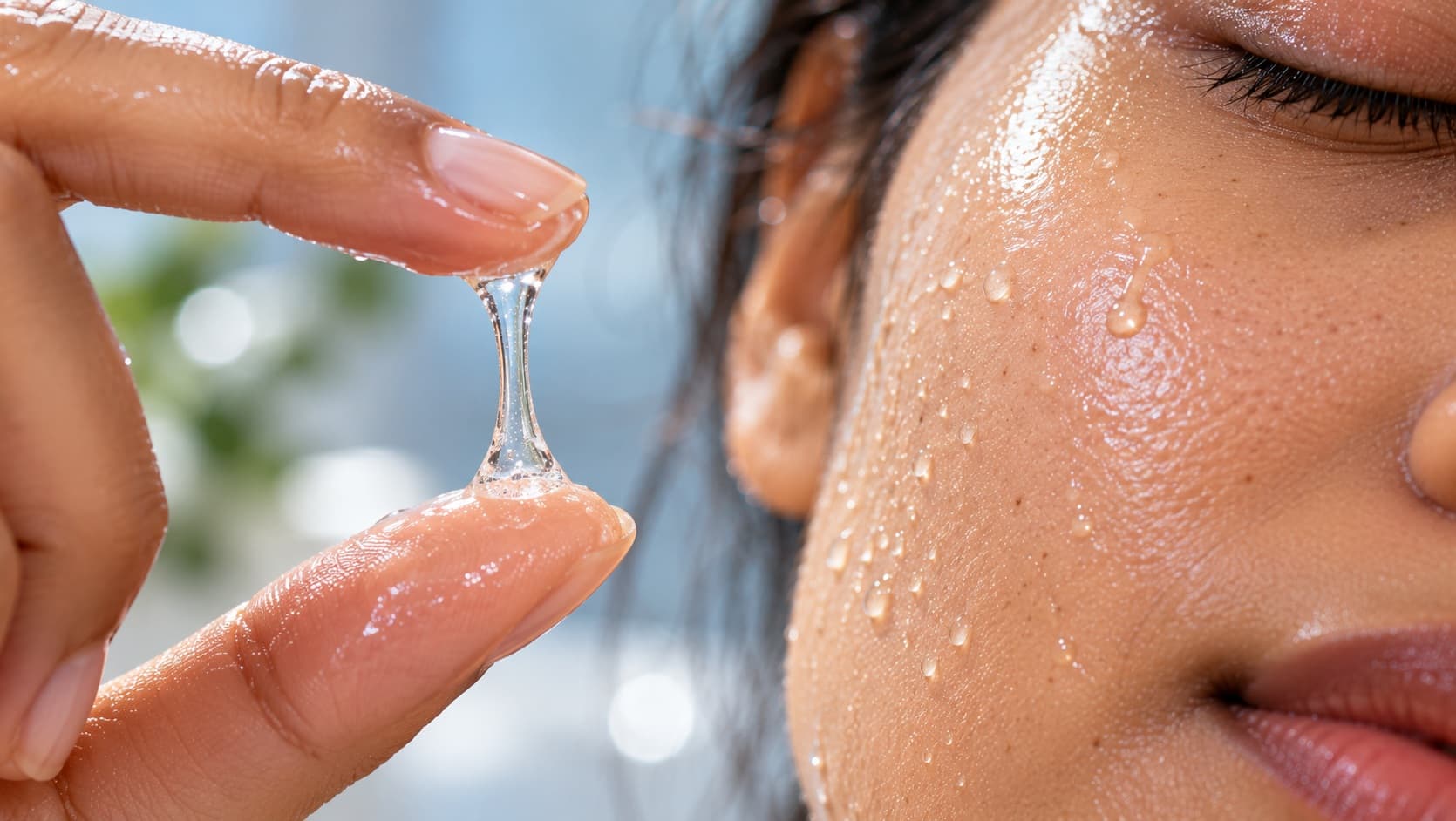
Hydration is the backbone of healthy, plump, glowing skin — and two ingredients come up again and again in that conversation: hyaluronic acid (HA) and polyglutamic acid (PGA). Both are humectants, meaning they attract and hold water in the skin. But they are not quite the same, and understanding the difference helps you get more out of both.
What is hyaluronic acid?
Hyaluronic acid is a molecule that occurs naturally in your skin, where it helps keep tissues hydrated and cushioned. In skincare, it is prized for its ability to hold many times its weight in water. HA comes in different molecular sizes: larger molecules sit nearer the surface and plump the top layers, while smaller ones can reach a little deeper, so many well-formulated products use a blend.
What is polyglutamic acid?
Polyglutamic acid is a newer humectant, derived through fermentation. It holds even more water than HA and tends to work by forming a light, breathable film on the surface of the skin. That film locks moisture in and leaves a smooth, dewy finish — which is why PGA is often described as sitting one layer above HA.
HA vs PGA — the key differences
- Depth: HA (especially smaller molecules) hydrates within the upper layers of skin; PGA works mainly on the surface.
- Water-holding: PGA can hold even more moisture than HA, gram for gram.
- Finish: PGA leaves a smooth, film-like, dewy feel; HA feels lightweight and absorbs in.
Do you have to choose?
Not at all — in fact, they make a great team. A common and effective approach is to apply hyaluronic acid first to draw water into the skin, then layer polyglutamic acid (or a moisturiser) on top to seal that hydration in and reduce water loss. Used together, they give deeper, longer-lasting hydration than either alone.
How to use humectants properly
Humectants draw water from wherever they can find it. In humid conditions that means moisture from the air; in very dry air, they can pull water from deeper in your skin, which is why technique matters:
- Apply HA or PGA to slightly damp skin, not bone-dry skin.
- Always follow with a moisturiser to lock the water in — otherwise it can evaporate away.
- They suit all skin types, including oily skin, because they hydrate without adding oil.
The bottom line
Hyaluronic acid and polyglutamic acid are both excellent hydrators that work in slightly different ways — HA within the skin's upper layers, PGA as a moisture-sealing surface layer. Use them together on damp skin, seal with a moisturiser, and you will get the plump, dewy, comfortable hydration that makes skin look its healthiest.